Living in Fairfield MT: A Look at Homes and Lifestyle
April 2, 2026
April 2, 2026
If you are looking for a Montana town with deep agricultural roots, a close-knit feel, and easy access to wide-open outdoor spaces, Fairfield deserves a closer look. Life here is not about fast growth or packed subdivisions. It is about practical living, local connections, and a daily rhythm shaped by farming, community events, and the landscape around you. Let’s dive in.
Fairfield is a very small town in Teton County with 759 residents and 318 households, according to Census Reporter’s latest ACS profile. That small size shapes almost every part of daily life, from how quickly you learn your way around town to how often you run into familiar faces.
The town sits on Highway 89 between Great Falls and Choteau, and the Town of Fairfield describes it as a trade center for the surrounding farming community. Fairfield is closely tied to grain production, irrigation, and the larger agricultural economy that supports the area.
To understand what it is like to live in Fairfield, it helps to start with agriculture. The town’s identity is rooted in homesteading, railroad access, and the expansion of irrigation after Gibson Dam was completed in 1929.
Today, that agricultural connection is still easy to see. The town notes that Greenfield Irrigation District water supports 83,000 acres in the surrounding area, which helps explain why Fairfield remains so closely tied to farming and ranch-country life. This is not a place that feels suburban. It feels rural, grounded, and connected to the land.
Fairfield’s town center appears to cluster around Central Avenue and Main Street, where local offices, community spaces, and events come together. The scale is small, which means errands, local events, and everyday routines tend to feel straightforward and familiar.
That small-town setup can be appealing if you want a place where life feels a little less rushed. Instead of a long list of big-city amenities, Fairfield offers a practical lifestyle centered on local services, community participation, and access to nearby regional destinations.
The Fairfield Area Chamber of Commerce also plays an active local role by gathering information on businesses, events, economic development, and resident resources. That points to a town where civic life is visible and organized, even at a small scale.
One of the clearest signs of Fairfield’s community spirit is its event calendar. The town’s events page highlights gatherings throughout the year, showing that local traditions still matter here.
Recurring events listed by the town include:
Swim Day, in particular, says a lot about Fairfield’s personality. According to the town website, it includes breakfast at the community hall, a parade down Main Street, a car show, games, swimming, music, a dance, and an all-school reunion. For residents, that kind of event can make the town feel active and connected in a way that goes beyond population size.
If you enjoy spending time outside, Fairfield offers more than you might expect from a town this small. The town highlights access to major Montana destinations such as Glacier National Park, Lewis and Clark National Forest, Freezeout Lake, and the Bob Marshall Wilderness on its community website.
Closer to town, Fairfield also has everyday recreation options. The town notes a city-center park with a swimming pool, tennis courts, and a playground, plus a golf course south of town with views of the Rocky Mountain Front. That gives you a mix of casual in-town recreation and larger outdoor adventures within the region.
One standout nearby feature is Freezout Lake Wildlife Management Area, just north of Fairfield. Montana Fish, Wildlife & Parks says the area is managed for waterfowl production and public hunting and viewing, with year-round wildlife access and peak spring counts of up to 60,000 snow geese and 5,000 swans. If wildlife watching, hunting access, or open-space scenery matters to you, that is a meaningful lifestyle advantage.
For many buyers, schools are one part of understanding a community. In Fairfield, the local school district is clearly a visible part of town life. Fairfield Public Schools describes the community as small with a big heart, notes National Blue Ribbon recognition for its elementary school, and says the high school has a U.S. News ranking.
Those details help show that the school system has a meaningful place in Fairfield’s local identity. As with many small Montana towns, school activities and community life often overlap in practical ways, from events to local traditions.
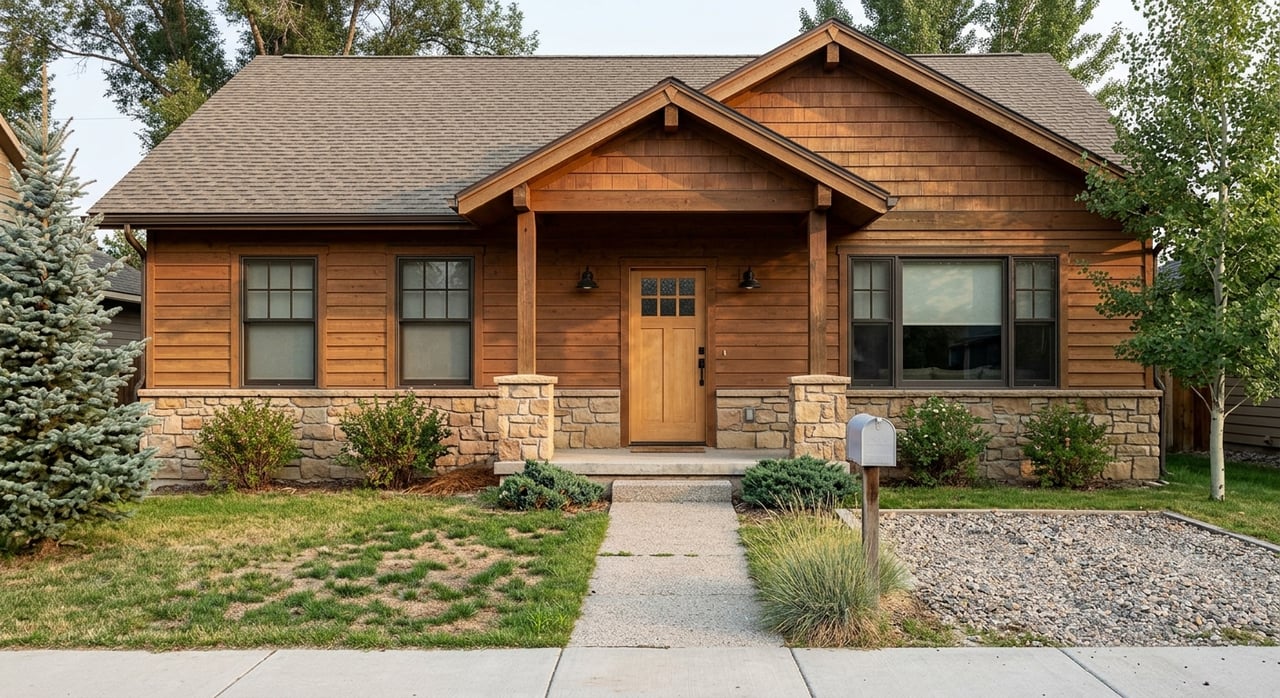
Housing in Fairfield is shaped by the town’s small size. Census Reporter lists 339 housing units and 318 households, which means the housing supply is naturally more limited than in larger Montana cities.
That limited inventory can matter if you are planning to buy. In a market this small, available homes may not come up as often, and your options may change quickly depending on timing.
The same ACS profile lists the median owner-occupied home value at $217,400. That is below the Teton County figure of $264,000 and the Montana figure of $375,800 in the same dataset, which may catch the attention of buyers comparing smaller rural markets across the state.
Overall, Fairfield reads as a low-density rural housing environment. You are more likely to find a practical small-town setting than a dense multi-family market. If you want space, simplicity, and a community with a strong local identity, that can be part of the appeal.
Fairfield is car-oriented, which is common in rural Montana communities. Its location on Highway 89 between Great Falls and Choteau helps connect residents to jobs, services, and destinations beyond town.
Census Reporter shows a mean travel time to work of 19.6 minutes, which supports the idea that commuting is part of daily life for some residents. If you are considering Fairfield, it helps to think of it as a town with its own local core but practical ties to the larger region.
That regional access can be useful if you want a quieter home base without feeling fully cut off. Fairfield is not a bedroom suburb, but it also is not isolated in the way some remote communities can be.
Fairfield can be a strong fit if you are looking for:
It may be especially worth a look if you want a place that feels grounded and practical. Fairfield offers a blend of small-town civic life, open landscapes, and day-to-day simplicity that can be hard to find in faster-growing markets.
Living in Fairfield, Montana, means choosing a town where agriculture, community events, and outdoor access all play an important role. You are not moving there for urban convenience or constant development. You are choosing a place with a small main-street core, strong local identity, and a lifestyle tied closely to the surrounding land.
If that sounds like the kind of Montana life you want, Fairfield may be well worth exploring. When you are ready to learn more about homes, land, or available property in the area, connect with Live in Montana Real Estate for local guidance you can trust.
Stay up to date on the latest real estate trends.
Live In Montana Real Estate delivers deep local knowledge and full-service support—residential, land, and commercial. Let them guide you through Montana’s unique market with integrity, expertise, and personalized care for every property need.