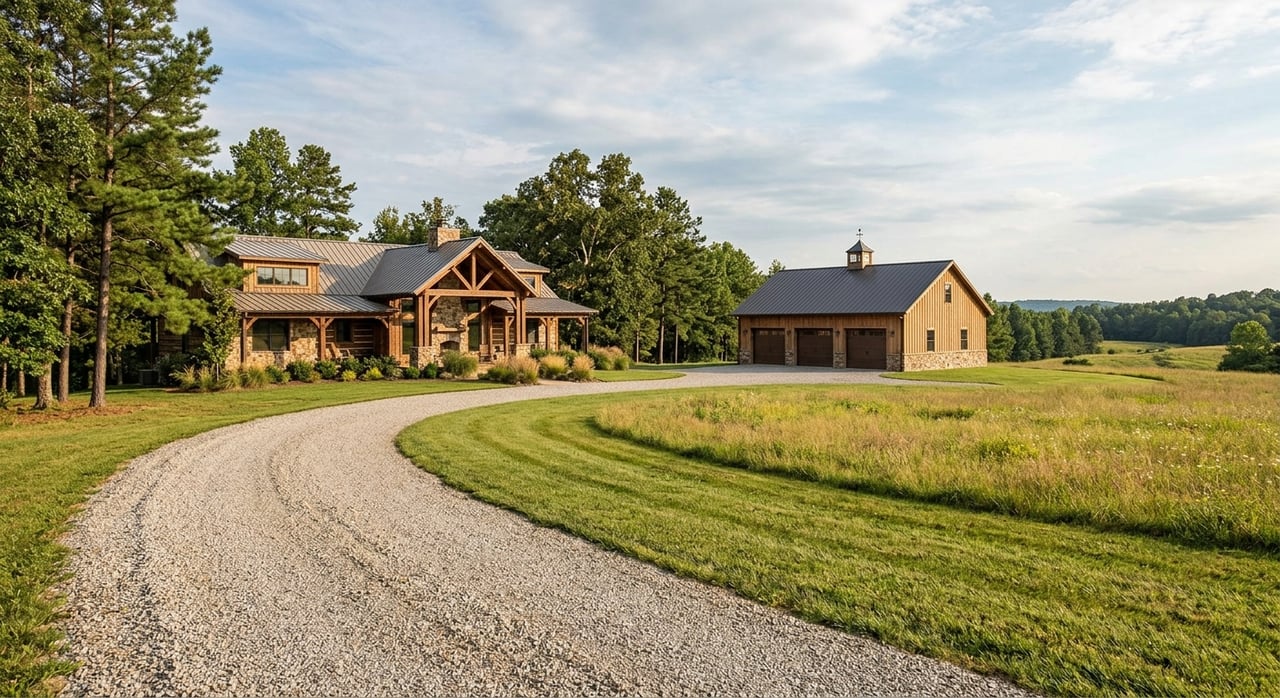
Buying A Home With Acreage Near Choteau Montana
May 7, 2026
May 7, 2026
Dreaming about a home with elbow room near Choteau? Acreage can give you privacy, views, and room to spread out, but it also comes with a very different checklist than buying a house on an in-town lot. If you want to buy smart, you need to look past the home itself and understand how the land functions day to day. Let’s dive in.
Buying a home with acreage near Choteau means you are often buying a land-and-infrastructure package, not just a house. In Teton County, access, water, septic, winter road conditions, fire exposure, and ongoing land care can shape your ownership experience as much as the layout or finishes.
That difference starts with where the property sits. Inside the City of Choteau, zoning permits are required for many improvements, including new construction, additions, fences, and signs. Outside city limits in unincorporated Teton County, the county planner says there is no zoning, and the county growth policy says the county does not impose building permit requirements beyond those required by the State of Montana.
That can sound simpler at first, but it usually means you need to do more practical homework. Instead of focusing on neighborhood-style rules, you will want to focus on whether the land has the access, services, and long-term usability you need.
One of the first questions to ask is whether the property is inside the City of Choteau or outside it in unincorporated Teton County. That line affects permits, utility expectations, and how future improvements may be handled.
In town, city services and city review play a bigger role. The City of Choteau says it is actively improving water and sewer systems and maintaining streets and sidewalks, which can be a major difference from rural ownership.
Outside town, the process often shifts away from city-style review and toward property-specific due diligence. If you are looking at a rural parcel, it is important to understand how the property works in real life, especially in all seasons.
For rural property near Choteau, access is not a small detail. It is one of the most important parts of your due diligence because legal access, physical access, and road maintenance can all affect your ability to use the property year-round.
Teton County subdivision regulations call for documentation of legal and physical access, road plans, road-maintenance agreements, and approach or encroachment permits when access connects to Montana Department of Transportation roads or local jurisdiction roads. The same rules say road easements must allow construction and perpetual maintenance of the road.
If the property is served by a private road, do not stop at the map. You will want to know who maintains it, how costs are shared, whether there is a written agreement, and what happens during winter weather.
Private-road details can affect convenience, cost, and safety. County rules note that dead-end roads longer than 1,000 feet need an approved turnaround, and roads longer than 1,500 feet are not permitted in that context.
The county also identifies narrow driveways and private bridges as recurring issues for fire protection and emergency response. Even if a road looks workable on a sunny day, it may create problems for larger vehicles, emergency equipment, or heavy snow conditions.
Year-round acreage living near Choteau means paying close attention to winter road service. The Teton County Road Department says gravel-road plowing may be delayed in wet snow.
Its snow-removal priorities place secondary roads and school bus routes first, followed by paved roads, then mail routes, and finally other gravel roads depending on need and use. If your home is on a lower-priority gravel route, that could affect commute time, deliveries, and general winter mobility.
Many acreage properties near Choteau rely on wells and on-site wastewater treatment instead of city utilities. That makes the water and septic file one of the first things you should review.
Teton County’s sanitarian says parcels under 20 acres should already have DEQ approval for the wastewater treatment system and well. If they do not, the owner must complete a site evaluation that includes a soil test pit.
This is one area where early questions can save you time and stress. You will want to know what approvals exist, whether records are available, and whether any future changes to the property could require additional review.
If a property uses water beyond a basic household setup, water rights can become a major part of the conversation. The Montana DNRC says a recorded water right is required for the majority of water uses to be valid, legal, and defensible.
DNRC also explains that all water uses starting after June 30, 1973 require either a permit or a permit exception. Beginning January 1, 2026, users who intend to develop water through a permit exception must file a Notice of Intent before using water from an exempt well.
If the property includes irrigation, stock water use, or plans for expanded use, it is worth asking exactly how the water is being sourced and documented.
Floodplain status matters on acreage, especially near the Teton River and other waterways. A property can feel wide open and still have floodplain issues that affect use, financing, insurance decisions, or future improvements.
Teton County’s sanitarian says a floodplain determination is required before septic installation if the proposed system is near a floodplain. The county planner also says the office issues floodplain permits and letters and maintains floodplain regulations.
DNRC says Teton County and the City of Choteau are updating floodplain maps for the Teton River, Sun River, Spring Creek, Deep Creek, Muddy Creek, and tributaries. Draft data could affect property owners once the maps are finalized, so this is a smart item to verify during your buying process.
Outbuildings are common on rural property in Teton County. Shops, barns, sheds, and other structures can add value and utility, but they should be evaluated with access and fire exposure in mind.
The county fire service area covers thousands of square miles and includes about 1,500 outbuildings. The county growth policy also notes high wildland fire risk along the Rocky Mountain Front and points to access problems for rural structures.
When you tour a property, look at more than condition and appearance. Consider whether larger vehicles can reach the structures safely and whether the site has reasonable defensible space around improvements.
Acreage ownership often comes with ongoing land care that buyers do not always think about at first. Teton County Fire Services says anyone burning in the county must obtain a burn permit, and any fire over 25 square feet requires activation of that permit or notification to county fire officials.
That matters if you expect to clear brush, manage debris, or maintain the land in a hands-on way. The county weed department also provides noxious-weed management on public and private lands and encourages landowners to create and maintain a weed-control plan.
In other words, the condition of the property is not just about the home today. It is also about the work required to keep the land usable and well managed over time.
If you think you may someday split the land, add another homesite, or change how the property is used, ask those questions early. Future flexibility can depend on current access, easements, water setup, and septic feasibility.
Teton County subdivision regulations look at legal access, existing easements, road maintenance plans, and the proposed disposition of water rights for smaller lots. Even if you are buying for personal use now, understanding those factors can help you evaluate long-term options.
This is especially important for buyers who see acreage as both a lifestyle purchase and a long-term asset. A parcel that looks simple on paper may have practical limits that only show up once you start asking deeper questions.
If you are buying a home with acreage near Choteau, these are some of the most useful questions to ask during your search:
Acreage near Choteau can be an incredible fit if you want space, views, and a more rural Montana lifestyle. But the best acreage purchases usually happen when you evaluate the property as a whole system, including roads, water, wastewater, floodplain concerns, fire exposure, and land maintenance.
That is where local, land-savvy guidance can make a real difference. When you understand the practical side of ownership before you buy, you can move forward with more confidence and fewer surprises.
If you are exploring homes with acreage near Choteau, connect with Live in Montana Real Estate for practical, local guidance tailored to Montana land and rural property.
Stay up to date on the latest real estate trends.


Live In Montana Real Estate delivers deep local knowledge and full-service support—residential, land, and commercial. Let them guide you through Montana’s unique market with integrity, expertise, and personalized care for every property need.