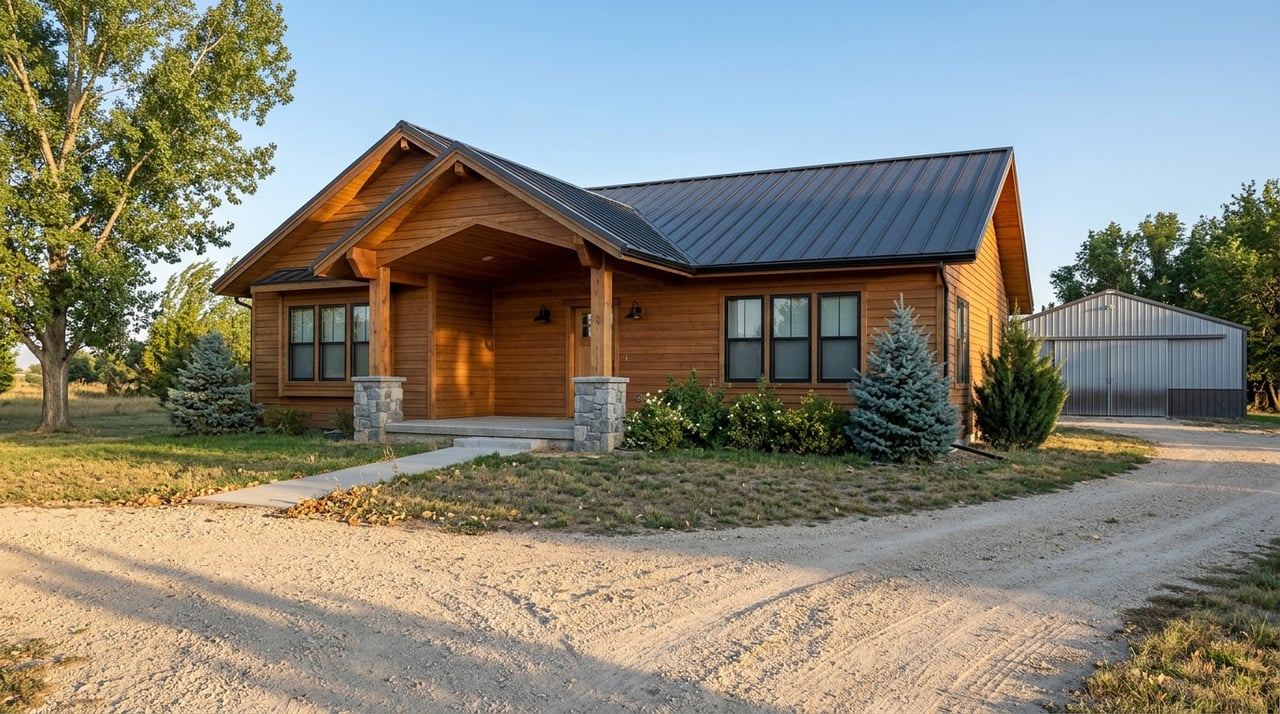
Guide to Hi-Line Montana Real Estate Near Havre
June 4, 2026
June 4, 2026
If you picture Montana as all mountain towns and resort markets, the Hi-Line may surprise you. In and around Havre, life moves at a different pace, with short local commutes, practical housing options, and a landscape shaped by open prairie, agriculture, and a string of small communities tied together along a historic rail corridor. If you are thinking about buying, selling, or simply learning what daily life looks like in the 59501 area, this guide will help you understand how housing and lifestyle fit together here. Let’s dive in.
The Hi-Line is more than a nickname. In practical terms, it refers to the Great Northern Railway corridor east of the Continental Divide and north of the Missouri River, a region known for rolling prairie and farmland.
That history still shapes how the area feels today. Communities developed around depots spaced roughly 8 to 10 miles apart, so the region functions more like a connected chain of small towns than one large metro area.
For the 59501 market, Havre is the main hub. It is Hill County’s county seat, Montana’s eighth-largest city, and sits about 45 miles south of the Canadian border.
At the same time, 59501 reaches beyond Havre itself. The ZIP code also includes places such as Havre North, Beaver Creek, Saddle Butte, West Havre, and Herron, which means the local housing conversation is broader than the city core alone.
One of the clearest takeaways about housing along the Hi-Line is affordability compared with Montana as a whole. In Havre, the median owner-occupied home value is $211,700, and in Hill County it is $202,600.
That stands well below Montana’s statewide median owner-occupied value of $375,800. For many buyers, that difference is what puts homeownership or small-acreage living within reach.
This is also not a market defined only by renting. The owner-occupied housing rate is 67.5% in Havre and 66.1% in Hill County, showing that ownership is a major part of the local housing picture.
Rents are relatively moderate as well. Median gross rent is $844 in Havre and $776 in Hill County, which helps frame the market as one where both renters and buyers can find practical options.
Much of the housing stock in Havre leans traditional and practical. Detached single-family homes make up a large share of the market, with mobile homes and smaller multifamily properties rounding out the mix.
A lot of the area’s homes are not new construction. Housing profiles point to a median construction year of 1967, which suggests you will see many mid-century homes and established neighborhoods rather than block after block of new builds.
For buyers, that often means looking at homes with mature lots, older layouts, and a range of update levels. For sellers, it means presentation and marketing matter, especially when highlighting improvements, maintenance, and usable space.
One of the most appealing parts of life in the 59501 area is how quickly housing options shift as you move away from town. In-town parcels tend to be modest and manageable, which works well if you want easier upkeep and quick access to errands.
But the market opens up fast beyond the core. Current examples in the area range from lots just over half an acre to parcels of 7, 9, 20, and even 26-plus acres.
That gives you real flexibility in how you define Montana living. You may prefer a home in town with a smaller lot, or you may want extra room for outbuildings, views, distance between neighbors, or a more rural setup.
If you are coming from a larger city, the pace of daily life here may feel refreshingly simple. Havre’s mean travel time to work is 10.5 minutes, while Hill County’s is 13.1 minutes.
Those numbers suggest that most work trips are local and manageable. You spend less time in traffic and more time focusing on your day, whether that means work, home projects, or enjoying more breathing room.
The area also shows signs of residential stability. About 90% of residents in both Havre and Hill County were living in the same home one year earlier, which points to a market with less turnover and a more settled feel.
Most households in this part of Montana still rely on personal vehicles for everyday life. Public transit is available through North Central Montana Transit, which serves communities in Hill and Blaine counties, but service is limited compared with larger urban systems.
That makes driving an important part of daily planning, especially if you live outside Havre or regularly travel between communities. It is one of the tradeoffs that often comes with more space and a quieter setting.
For longer east-west travel, the Amtrak Empire Builder connects towns including Shelby, Havre, Malta, and Glasgow along the Hi-Line corridor. For road travel, Montana Department of Transportation 511 is the standard source for current road conditions and winter travel updates.
When people talk about living on the Hi-Line, Havre often becomes the center of the conversation for a reason. It concentrates many of the services and conveniences that support day-to-day life across the wider region.
The local economy is anchored by agriculture, but it also includes farming, ranching, hospital and health services, education, professional and retail business, manufacturing, and railroad industries. That mix helps make Havre a practical service center rather than a one-industry town.
Key services are located there as well. Northern Montana Hospital provides emergency services, imaging, surgical services, dialysis, and labor and delivery, and MSU-Northern serves as a comprehensive university for north-central Montana.
Havre also has a public K-12 school district, along with stronger transportation access than many smaller corridor communities. The local airport offers fuel, parking, air ambulance, air cargo, charter flights, and commercial service, and Havre is also an Amtrak stop.
If you are considering a move to the Hi-Line, it helps to match your home search to your daily routine. A property in Havre may offer easier access to health care, education, shopping, and transportation, while a property farther out may offer more land and a quieter setting.
Neither option is better for everyone. The right fit depends on how often you want to drive for errands, what type of lot size you need, and whether your priority is convenience, elbow room, or a balance of both.
This is also a market where local knowledge matters. Because 59501 includes both town properties and rural acreage, buyers often need help comparing not just price, but also access, location, lot size, and day-to-day practicality.
If you are selling in the 59501 area, your property’s story matters. Buyers may be comparing a compact in-town home with a small-acreage property outside the core, so clear positioning can make a major difference.
For in-town homes, convenience is often a key strength. Proximity to Havre’s main services, shopping, schools, medical care, and transportation can be an important part of the value picture.
For larger lots or rural properties, buyers are often looking at space, flexibility, and the overall setting. Strong marketing, accurate pricing, and visuals that show how the property lives on the land can help your listing stand out.
The Hi-Line is not trying to be a resort market or a fast-growth urban center. Its appeal is different, and for the right buyer, that is exactly the point.
You can find a housing market that is more affordable than the Montana median, a region where commutes are short, and a lifestyle built around space, routine, and practical living. You also get a setting where town and country are closely linked, with Havre serving as the main anchor for the wider area.
For some people, that combination feels like a better long-term fit than busier markets with higher prices and denser development. The value here is not only what you buy, but how you get to live.
If you are exploring homes, land, or a future sale along the Hi-Line, working with a brokerage that understands both Montana communities and Montana property types can make the process much smoother. To talk through your options in north-central Montana, connect with Live in Montana Real Estate.
Stay up to date on the latest real estate trends.
Live In Montana Real Estate delivers deep local knowledge and full-service support—residential, land, and commercial. Let them guide you through Montana’s unique market with integrity, expertise, and personalized care for every property need.