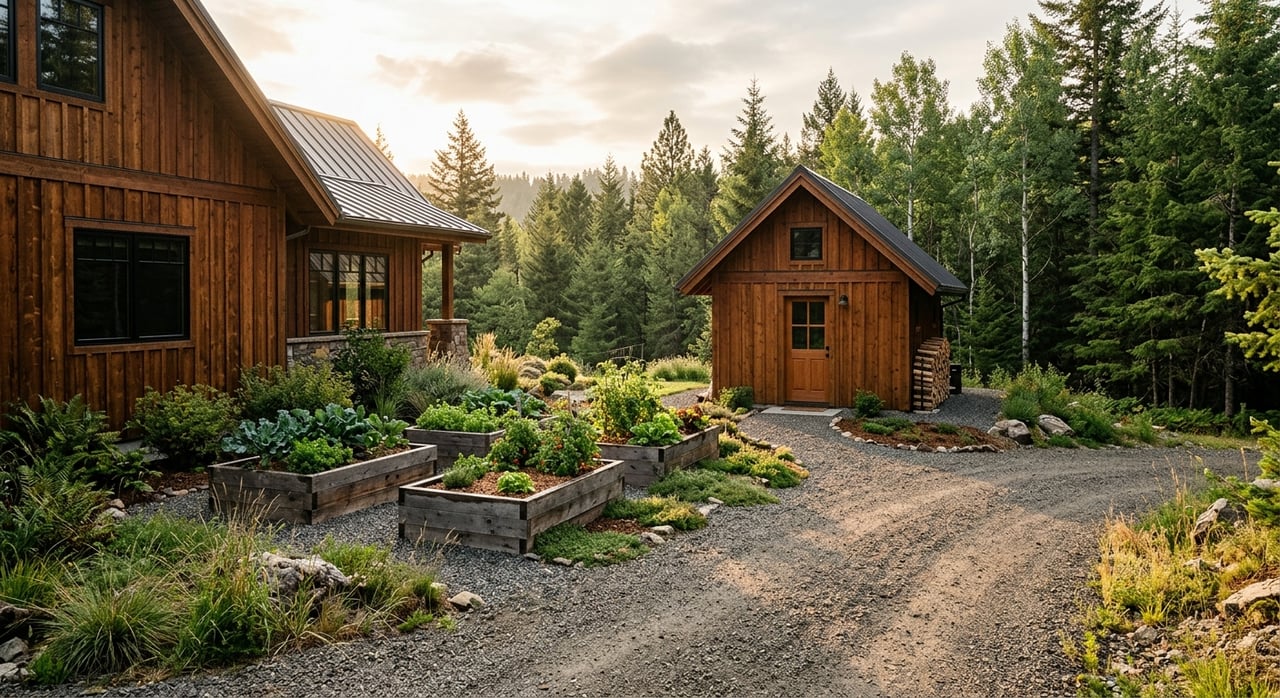
Small Acreage And Country Living Near Fairfield
July 2, 2026
July 2, 2026
Dreaming about a little more elbow room outside town? Small acreage near Fairfield can offer exactly that, but it also comes with a different kind of ownership than a home on a standard town lot. If you are thinking about country living in this part of Teton County, it helps to know what daily life, property setup, and long-term upkeep really look like before you buy. Let’s dive in.
Fairfield sits in an agricultural part of Teton County, and that shapes the feel of the area in a big way. County materials describe Fairfield as the Malting Barley Capital of the World, with about 83,000 acres of irrigated cropland nearby. In the broader county, cropland, range, and pasture dominate the landscape.
That means small-acreage properties near Fairfield often feel connected to working land rather than suburban expansion. You may find more open views, more separation from neighbors, and more space for outbuildings, storage, or hobby uses. At the same time, the setting asks you to think more carefully about roads, water, drainage, and seasonal upkeep.
If you are moving from an in-town home, the biggest shift is often responsibility. On small acreage, you are usually managing more land and more systems yourself. That can be rewarding, but it is important to go in with clear expectations.
Daily life may include regular mowing, weed control, checking fences and gates, and maintaining driveways or culverts. Winter can also play a bigger role in how you plan your day, especially if you are on a gravel road outside town.
NOAA climate normals for the Fairfield station show an annual mean temperature of 44.4°F and annual precipitation of 12.37 inches. In practical terms, that means cold winters, warm summers, and a fairly dry climate. Teton County also notes extreme weather conditions on the Rocky Mountain Front, including very high winds and very cold winter temperatures.
One of the clearest differences between living in Fairfield and living near Fairfield is the regulatory setup. Teton County does not currently have zoning regulations in place, while the Town of Fairfield does. Inside town limits, Fairfield has permit requirements before construction, setback rules, and lot coverage standards.
Town materials also note that the average town lot is about 25 by 140 feet, that 7,000 square feet are required to build a residence, and that no more than half of the square footage may be covered by structures. In-town living is generally more compact and more rule-based.
Outside town, you usually gain more physical room and flexibility in how the property feels and functions. But that does not remove the need for due diligence. Parcel by parcel, you still need to verify things like septic, access, floodplain status, and any deed or easement issues.
Small-acreage properties near Fairfield are often a good fit for uses that need more room than a town lot can offer. Depending on the property, that may include:
This kind of setup matches the broader agricultural character of the county. It also means you should look beyond the house itself and pay close attention to how the land is laid out and how you plan to use it.
Water is one of the most important topics to understand near Fairfield. In town, Fairfield’s municipal water system draws from six shallow wells south of town that tap the Fairfield Bench Aquifer. The town says supply can become seasonally tight before the aquifer is replenished by farmland irrigation, and watering restrictions may be necessary in drier years.
The town’s recent updates also show active water-restriction notices and ongoing water and sewer projects. That tells you water management is a real local issue, not just a background detail.
If you are looking outside town, water questions become even more property-specific. You will want to understand whether the parcel relies on a private well, what testing or evaluation may be needed, and how water access fits the property’s intended use.
For rural property, septic is another major item. Teton County says septic permits are required, and a site evaluation may be needed. If there is no prior approval, the county sanitarian says a soil test pit must be dug.
This is one reason why two acreage properties that look similar online can be very different in practice. Before you move forward, you want clear answers about existing approvals, system condition, and whether the site supports your plans.
The county also advises a floodplain determination before septic installation if the system is near a floodplain. That can be especially important on parcels near creeks, rivers, or lower drainage areas.
Access is not just about whether a property has a legal route in and out. It is also about how that access works in real life through changing seasons. Teton County subdivision regulations say each lot must have access to a public or private street or road.
For homes on gravel roads, winter conditions deserve extra attention. The Teton County Road Department says gravel-road plowing can be delayed during wet snow to protect the roadbed. County plowing priorities also place secondary roads and school bus routes ahead of gravel roads.
If you are considering a rural driveway or gravel-road location, ask yourself practical questions. How comfortable are you with snow management? How long is the driveway? What happens after a major storm or during a stretch of severe wind and cold?
Because Fairfield is surrounded by irrigated agricultural land, irrigation and drainage features can be a real part of acreage ownership. Ditches, canals, and pipelines may cross or border a parcel. These are not small details, because they affect how you use the land and where maintenance access is required.
Teton County subdivision regulations require easements where ditches or pipelines cross a parcel. They also require a minimum 10-foot maintenance width on each side of irrigation canals and ditches.
If you are shopping for land on or near the Fairfield Bench, this deserves a close look. You want to know what crosses the property, who has access rights, and how those features may affect fencing, building plans, or day-to-day use.
Floodplain review is one of the most important steps when buying small acreage near Fairfield. According to DNRC, Teton County and the City of Choteau are working with FEMA on updated floodplain maps. County materials also state that new construction is not permitted in a floodway and that a floodplain development permit is required in the 1%-annual-chance floodplain.
If a property is near a creek, river, drainage corridor, or low-lying area, treat flood status as a top-tier diligence item. It can affect where you build, how you insure or improve the property, and what kind of future use is realistic.
On small acreage, weed control is not a one-time weekend project. Teton County’s weed district serves public and private lands and encourages landowners to create and monitor weed-control plans. The district also offers equipment and education.
That matters because edges, ditches, pasture areas, and disturbed ground often need ongoing attention. If you want a tidy, functional property, seasonal weed management should be part of your budget and routine from the start.
Rural ownership also brings more responsibility around fire safety. Teton County fire services notes that open burning requires a burn permit. The county also emphasizes that it covers a large rural response area with many residences and outbuildings.
If you plan to clean up brush, manage slash piles, or do seasonal burning, it is important to understand the local process before you start. This is especially true on acreage where outbuildings, fencing, stored materials, and open ground can change how fire risk is managed.
For many buyers, the appeal is simple. You get more room, a quieter setting, and a stronger connection to Montana’s agricultural landscape. Small acreage near Fairfield can be a great fit if you want space for projects, storage, gardening, or a more independent way of living.
The tradeoff is that country living usually asks more of you than an in-town property. You may be managing wells or septic, tracking weed growth, thinking about snow access, and paying closer attention to irrigation, drainage, and floodplain questions.
If that balance sounds right for you, the best next step is to look at each property through both a lifestyle lens and a land-use lens. The right acreage should not just look good on showing day. It should also work well for you in every season.
If you are exploring small acreage or country living near Fairfield, Live in Montana Real Estate can help you evaluate the details that matter and find a property that fits how you want to live.
Stay up to date on the latest real estate trends.


Live In Montana Real Estate delivers deep local knowledge and full-service support—residential, land, and commercial. Let them guide you through Montana’s unique market with integrity, expertise, and personalized care for every property need.