Wolf Creek's Winter Fishing Belongs to the River Until Late January
November 26, 2026
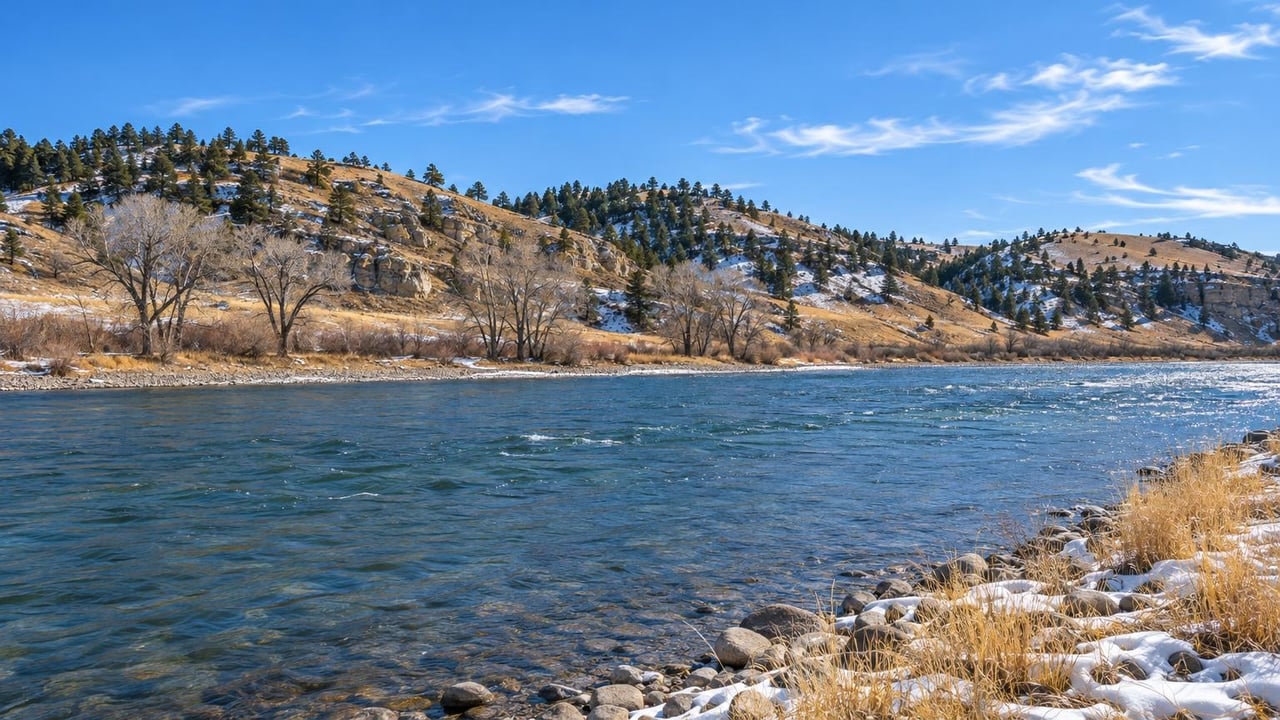
On Nov. 20, the water coming out from under Holter Dam was 47 degrees. Air temperatures that week were forecast at 20 to 40, with a chance of snow, according to The Trout Shop's Missouri River fishing report for that date. The river was warmer than the air above it. Holter Lake upstream is still a long way from holding a person on its ice.
Around Wolf Creek, winter fishing comes in that order: the river first, then the lake. Montana Fish, Wildlife & Parks says fishable ice on Holter Reservoir typically doesn't show up until late January and lasts only four to six weeks. That leaves about two months, from Thanksgiving weekend into late January, when the open water below the dam is the main fishery close to home. This year the river is also running low for the season.
FWP's ice fishing page lists typical first-ice timing for lakes across the region. Lined up together, they show how late Holter freezes. Browns Lake, 15 miles from Lincoln, usually has some of the earliest fishable ice in Region 2, around the end of November. East Fork Reservoir near Lewistown typically has fishable ice by mid-December. Lake Frances usually has it by early January. Holter, at 3,667 acres, typically holds off until late January.
So a household in Wolf Creek that wants to ice fish in December is driving somewhere. A household that wants to fish close to home in December is on the Missouri. The lake gets its turn later, for a short window, roughly late January into early March if the typical four-to-six-week span holds.
The Missouri below Holter is a tailwater. Dam releases keep its water levels and temperatures more consistent, which gives it a longer fishing season. The Nov. 20 report from The Trout Shop describes the river as it was heading into the weekend of Nov. 21 and 22.
The #18 Blue-Winged Olives are "most likely all but gone," and midges are the main hatch now that water temperatures have dropped out of the 50s. The shop's dry-fly list for midge days is the Renegade, Purple Haze, Cluster Midge, Hanging Midge, CDC Adult Midge and The Honker. For that cloudy, snowy weekend, the shop expected the best midge dry-fly fishing and the best chance to swing flies.
Under an indicator, sow bugs are still the standard starting point. The shop's morning setup is a Double Sow Bug rig, a beadhead followed by one without a bead, with a mayfly or midge nymph added later in the day. Its zebra midge picks are the Flying Zebra, the Zebra and the Tufted Zebra for the small hatches. When fish rise only now and then, the report suggests swinging soft hackles through the zone instead of chasing individual rises with a dry.
Streamers have their own timing. The report says fish are hunting small trout, whitefish and sculpins, and that streamers work best under clouds or when the sun is off the water. Browns coming off the spawn are described as "hungry and greedy." For trout spey, it suggests soft hackles and small leeches on a Scandi setup, or a Skagit line with a light tip for small to mid-sized streamers. It expects the swing to get better as water temperatures drop through the 40s.
Down in Craig, Headhunters posted a three-line winter notice on Nov. 21: bring your gloves, your handwarmers and your swing rod. It matches the Trout Shop report, which also recommends layers, hand warmers or surgical gloves.
The flow numbers this fall have local meaning. The USGS gauge below Holter Dam near Wolf Creek read 3,080 cubic feet per second on the morning of Nov. 23, 2026, a provisional figure. The median flow for that date is 4,290 cfs. The Trout Shop's Nov. 20 report described a "bump in flows to 3260 CFS."
FWP's management plan for the Missouri River and Dearborn drainage explains why those numbers matter. Trout, especially brown trout, prefer the river's side channels for spawning, and the side channels are important year-round for spawning, egg incubation and rearing young fish. FWP found that at 4,100 cfs, 64 percent of the side channels had enough flow for spawning, incubation and rearing. At 3,600 cfs, only 9 percent did. FWP recommends a year-round minimum of 4,100 cfs whenever possible. When drought conditions don't allow that, managers try to hold 3,000 cfs to protect riffle habitat in the main channel.
Last week's readings, about 3,080 to 3,260 cfs in the Nov. 20 to Nov. 23 window, are below the 3,600 mark and just above the 3,000 floor. The same FWP plan says water storage and management at Canyon Ferry affect flows below Holter, while Hauser and Holter dams operate as run-of-river projects. The number to watch for the river through Wolf Creek this winter is what Canyon Ferry releases upstream. In June 2026, the U.S. Army Corps of Engineers reported below-average runoff across the upper Missouri basin, with that month's annual forecast above Sioux City at 60 percent of average.
Low water also continues a pattern we wrote about in August, when Wolf Creek's summer flows were running lower than usual. The Trout Shop's Nov. 20 report put it this way: "The cold is here but we need some snow!"
The USGS gauge page updates through the day. Checking it before heading out shows whether the river is near the median or holding near the low end.
Two months of cold-weather river fishing goes better with a place to buy coffee and lunch, and the shops on this stretch have posted winter plans. The Trout Shop in Craig moved to winter hours of 9 a.m. to 4 p.m. on Sunday, Nov. 1. The shop says it will be open every day "unless the roads are terrible," with coffee, breakfast sandwiches, deli sandwiches, sides, snacks, soft drinks, wine and beer, plus guides, shuttles, flies and gear. The Hub Saloon in the Trout Shop Lodge planned to roll out pizzas from 5 to 8 p.m. during November, until further notice, with preorders at The Trout Shop or walk-ins at the Hub after 5. Check with the shop to confirm the pizza nights are running before you count on dinner there. The Nov. 20 report also tells cold anglers to stop in for a hot burrito and coffee.
In Wolf Creek, Wolf Creek Angler's Oct. 22 fishing report said the shop would keep opening daily at 8 a.m. "for the time being," with its bungalows available through the winter starting Nov. 1. Since the shop described that schedule as temporary, call ahead on cold days.
When Holter does freeze, the fishing changes completely, and FWP's description makes the late-January wait feel shorter. Eater-sized yellow perch are common, usually caught on standard jigging tackle such as Swedish Pimples and Hali Jigs in 10 to 40 feet of water. Large rainbow trout are common too, and they're usually caught shallower, in less than 10 feet, on lead, buckshot, tungsten and rocker jigs. Worms or maggots work for both. Ling, also called burbot, are usually caught by anglers targeting perch or by fishing cut bait such as sucker meat near the bottom.
The rainbows have been restocked recently. FWP's stocking records for Holter show five rainbow trout plants from Sept. 22 to Sept. 24, 2026, totaling 51,990 fish. Montana Walleyes Unlimited's Oct. 1 report described good rainbow fishing across Holter, perch around the weed beds in the Canyon, near Sleeping Giant and Cottonwood Creek at 25 to 40 feet, and a few walleye near Clay Banks.
Ice derbies are part of the season, but the approved ones are elsewhere. FWP's list of approved 2026–27 ice fishing contests includes a Broadwater County Lions Club event at Canyon Ferry on Feb. 6, 2027, and a Montana Ducks Unlimited tournament at Canyon Ferry on Feb. 13, 2027. Both dates fall inside Holter's usual ice window, so Holter anglers who want a derby that month will be driving to Canyon Ferry.
Holter's late, short ice season also makes first-ice judgment calls harder. FWP's ice safety guidance says never to assume ice is safe, to measure clear ice and stay off anything under 4 inches, and to look for at least 4 to 6 inches of clear ice. It also says never to walk on river ice. FWP also suggests calling the local FWP office or a local sport shop about conditions before going out.
If you're thinking about a place in Wolf Creek where you can fish the river in December and walk onto Holter in February, Live in Montana Real Estate can tell you which roads and river access points matter in January and which ones only matter in July. Connect with a Montana expert, and start with our notes on buying a fishing cabin in Wolf Creek.
Stay up to date on the latest real estate trends.
Live In Montana Real Estate delivers deep local knowledge and full-service support—residential, land, and commercial. Let them guide you through Montana’s unique market with integrity, expertise, and personalized care for every property need.