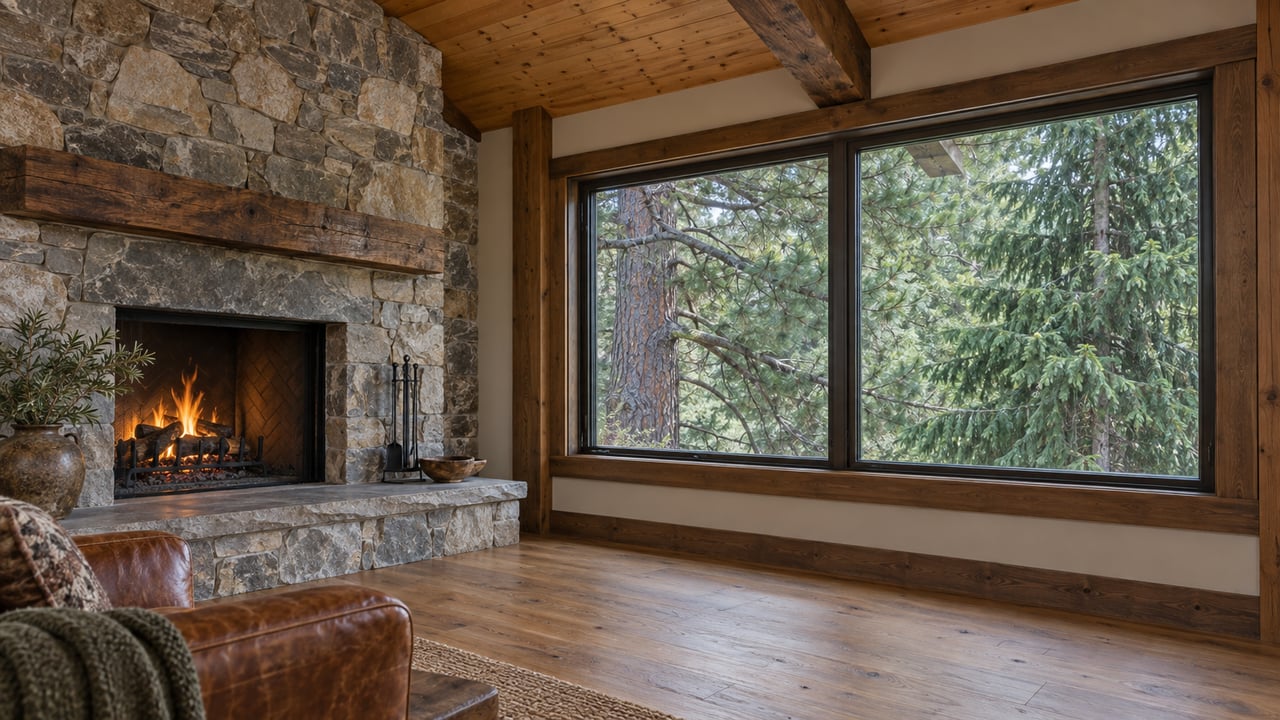
Whitefish Approved The Permit. The Covenant Still Won.
October 1, 2026
October 1, 2026
In 2022, a Florida couple bought a home in a quiet subdivision outside Whitefish and started renting it out by the night through a local company called I Love Whitefish, with listings running on Airbnb and VRBO for up to ten guests at a time. Flathead County had already granted the property a short-term rental permit. On paper, the couple, operating as R&R Mountain Escapes, LLC, had done everything a host is supposed to do.
Their neighbors sued anyway. The subdivision had been carved out of a larger parcel back in 1990, when the original owner, Edna Mae Astrope, recorded a declaration of covenants meant to preserve the land for what the document called "country residential living." The declaration barred "any commercial purpose whatsoever" and prohibited using any structure as an apartment or multi-family building. The neighbors, six of them, argued that guests paying to stay in a rotating cast up to ten per night was exactly the kind of commercial activity the covenant was written to stop. One filing described an incident where six unattended children staying at the rental wandered into a neighboring pasture that held a bull, and the property owner had to intervene quickly to get them out.
A Flathead County district court sided with the neighbors in November 2023 and enjoined R&R from renting the property for terms under 30 days. R&R appealed. The Montana Supreme Court took up the case in March 2025 and issued its ruling on July 22, 2025, affirming the lower court in full. The permit Flathead County had issued never entered into the analysis. It didn't need to.
The court's opinion, written by Justice Laurie McKinnon, read the 1990 declaration as a whole rather than isolating any single clause. The commercial-use prohibition, combined with language barring apartment-style or multi-family use and a separate clause against creating a nuisance, left the justices with what they called an unambiguous intent: single-family dwellings, used for residential purposes, on land meant to support farming and ranching, not a rotating short-term guest business.
That mattered because Montana's own case law had left this question murky. In a 2020 case called Craig Tracts, the same court had looked at a covenant that limited land to "residential purpose" and found the phrase too vague to settle whether short stays counted, since it said nothing about how long an occupant needed to remain to qualify. The Whitefish subdivision's covenant did more than gesture at "residential purpose." It named commercial activity directly and barred it outright, and the court treated that specificity as the difference between an ambiguous restriction and an enforceable one.
The county's approval of R&R's short-term rental permit reflected the county's own zoning rules, and those rules are a separate legal system from a subdivision's recorded covenants. The Supreme Court's opinion went further and reversed a piece of the district court's reasoning that had leaned on the county zoning code to infer a 30-day minimum. The justices said the covenant governs on its own terms, independent of whatever the zoning map allows or requires.
That is the detail a lot of buyers miss. A county or city permit tells you the government has no objection. It says nothing about whether your neighbors, through a document recorded decades before you bought the house, already agreed among themselves to forbid the very use you're planning.
Whitefish itself allows short-term rentals under its own ordinance, but only within five zoning districts: WB-3, WRR-1, WRR-2, WRB-1, and WRB-2. A property inside one of those districts still has to clear the city's permitting process under Section 11-3-35 of the municipal code, which requires a business registration, an annual fire marshal inspection, a state public accommodation license, and monthly remittance of the city's resort tax.
None of that changes the covenant question. The R&R property sat outside Whitefish's city limits in unincorporated Flathead County, but the Supreme Court's reasoning didn't turn on which government held zoning authority. It turned on the words in the declaration. A house sitting squarely inside WRR-2, cleared for resort rental use by the city, can still belong to a subdivision whose 1990s-era covenants use language a court would read the same way it read Astrope's declaration. Zoning tells you what the city permits. It doesn't tell you what your subdivision's paperwork already forbids.
Montana finished phasing in a new property tax structure for the 2026 tax year, and it sorts every residential property into one of two groups based entirely on how the home is used, not where it sits or what it's worth.
A home where the owner lives at least seven months of the year, or one rented under leases of 28 days or longer for at least seven months a year, qualifies for a tiered reduced rate that starts at 0.76% on the first $378,000 of market value and climbs in brackets to 1.90% on value above $1,512,000, a threshold the Department of Revenue sets at four times the statewide median. Everything else, meaning second homes and nightly short-term rentals, is taxed at a flat 1.90% of the full assessed value with no bracket relief at all.
| Use of property | Tax treatment |
|---|---|
| Owner-occupied primary residence, 7+ months a year | Tiered rate, 0.76% to 1.90% by bracket |
| Long-term rental, 28-day+ leases, 7+ months a year | Same tiered structure as homestead |
| Second home or nightly short-term rental | Flat 1.90% of full market value |
A short-term rental cannot qualify for either reduced classification by definition. It doesn't meet the seven-month owner-occupancy test, and nightly guests don't meet the 28-day lease test. That means the tax question is settled the moment you decide to run nightly rentals, independent of whether the zoning and covenant questions come back favorable.
The enrollment window for the 2027 tax year opened on May 4, 2026 and closes March 1, 2027. Reduced-rate status doesn't transfer with a sale. If you buy a home that currently carries the homestead rate, that classification rides through the rest of the calendar year under the new owner, but you have to file your own application before the deadline to keep any reduced rate into the following year. Miss it, and the property reverts to the flat 1.90% rate until you catch the next enrollment cycle.
The recorded Declaration of Covenants, Conditions and Restrictions. Not the HOA's one-page summary sheet. The actual recorded document, filed with the county clerk. Look for language around commercial use, business activity, nuisance, and multi-family occupancy. A declaration silent on all four is a different legal situation than one that names them directly.
Confirmation of the zoning district, if nightly rentals are the plan. Inside Whitefish city limits, that means verifying the parcel sits in WB-3, WRR-1, WRR-2, WRB-1, or WRB-2. Outside city limits, it means checking Flathead County's own zoning and permit rules, and understanding that a county permit protects you from the county, not from a neighbor holding a recorded covenant.
The property's current enrollment status with the Montana Department of Revenue. Ask the seller directly whether the home carries the homestead or long-term-rental reduced rate today. That status won't follow you into next year automatically. You'll need to file your own application before the March 1, 2027 deadline to avoid a full year at the flat rate.
Does the Brandt ruling only apply outside Whitefish city limits? No. The property in that case sat in unincorporated Flathead County, but the Supreme Court's reasoning rested on the covenant's own language, not on which government held zoning authority. A recorded declaration inside city limits carries the same weight in court.
What if a subdivision's covenants never mention rentals at all? Read the document itself before assuming either way. The 2020 Craig Tracts case involved a covenant limited to "residential purpose" without any commercial-use prohibition, and the court found that language ambiguous, ultimately allowing the rental. The difference in the Whitefish case was covenant language that named commercial activity directly and barred it. The presence of an HOA tells you nothing on its own. The wording does.
Can I buy a Whitefish property purely for personal use and skip this entirely? Largely, yes. A covenant challenge requires the kind of ongoing paying-guest activity R&R was running. A second home with no rental use has no commercial activity for a covenant to prohibit, so it only has to clear the tax classification question, which lands it at the flat 1.90% rate regardless of the neighborhood.
Whitefish's paperwork rewards buyers who read past the listing sheet. A permit tells you the government cleared your plan. It doesn't tell you what a declaration filed decades ago already settled among the neighbors, and it doesn't touch what the state now charges you for owning the house at all. If you're weighing a second home or a rental purchase here, Live In Montana Real Estate can help you pull the covenants, confirm the zoning, and check the enrollment status before you're the one finding out the hard way.
Stay up to date on the latest real estate trends.




Live In Montana Real Estate delivers deep local knowledge and full-service support—residential, land, and commercial. Let them guide you through Montana’s unique market with integrity, expertise, and personalized care for every property need.